
The Policy-as-Code Decision That Doesn't Bite You Until Later
The policy-as-code choice between OPA and Cedar feels low-stakes at ten accounts. It stops feeling that way at 500.

Muskan works on the platform-engineering side of Zop.Dev, focused on multi-cloud provisioning and the developer experience of shipping services across AWS, GCP, and Azure. She writes about IDP design, golden paths, and what production-grade defaults actually look like.
The policy-as-code choice between OPA and Cedar feels low-stakes at ten accounts. It stops feeling that way at 500.

ROSA is invisible to the AWS APIs that discover EKS, so it drops out of inventory and every policy inventory feeds. One cluster list fixes that.

Tag apply on AWS went from 21 resource types to 36. The work was refusing to build an ARN the platform could not prove pointed at the right resource.

Off-hours incidents expose a structural flaw in how engineering teams are staffed: human cognition degrades sharply after midnight, and every minute of that degradation has a direct dollar cost…

The credit cliff kills runway not because cloud bills grow, but because the pricing environment changes completely the moment credits expire.
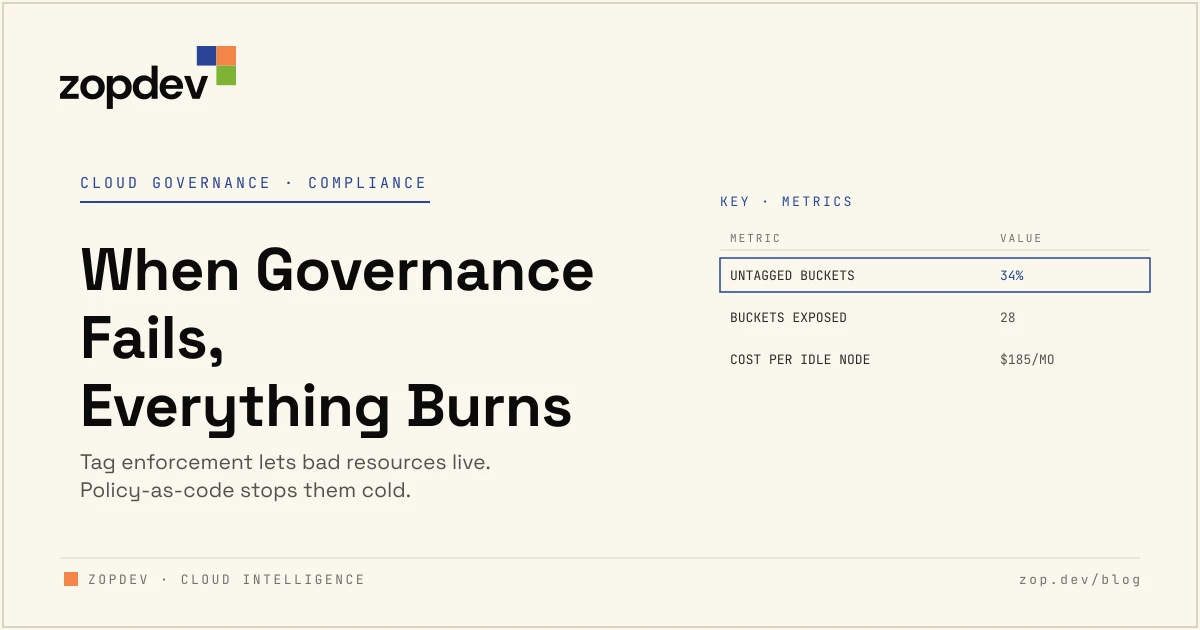
Governance failures in cloud environments do not fail quietly. They propagate. A single misconfigured IAM role, an untagged production bucket, or an overly permissive network policy does not stay…

Every MCP server built against the 2025-11-25 specification pays what we'd call a session tax: the recurring infrastructure cost of keeping a stateful connection alive across every request an agent…

Every time a team ships before governance is ready, they do not pay once. They pay every quarter the gap stays open.

Autoscaling latency is not a performance problem. It is a billing problem. Every second a Kubernetes cluster waits to provision a node, existing nodes carry idle capacity that the cloud provider…

Cloud credits expire. That is the mechanism that turns a $100K grant into a liability. Cloud providers structure these programs with hard expiration dates because free compute that converts to paid…

Cloud credits expire as a hard accounting event, not a soft deadline, and every dollar that hits that wall is gone with no recovery path. Startups and researchers are the primary groups absorbing…

HashiCorp's August 2023 relicensing of Terraform from MPL-2.0 to the Business Source License 1.1 was not a routine legal update. It was a governance event that forced every infrastructure team to…

Free cloud credits function as a deferred billing mechanism, not a cost waiver, and every startup that treats them as free money pays the difference in a single invoice.

AI Ops agents create a dangerous illusion: they close tickets fast, but they routinely fix the wrong thing first (ZopDev, "Why Your AI Ops Agent Fixes the Wrong Thing First").

The free-credit expiration is not a billing event. It is a systems failure that was designed into the architecture from day one.

Cloud pricing pages are a selection effect, not a disclosure. Providers surface compute and storage rates because those numbers are competitive and comparable. Egress fees, support tiers, and…

Cloud bills grow faster than the teams responsible for paying them, and the gap between what you spend and what you understand is where waste compounds silently.

HashiCorp's August 2023 switch from the Mozilla Public License 2.0 to the Business Source License 1.1 drew a hard line between commercial and community use of Terraform, and that line fractured a…

HashiCorp's August 2023 relicense of Terraform from MPL-2.0 to the Business Source License forced every infrastructure team to make a governance decision, not a technical one.

Every internal developer platform carries a hidden 4-week tax: engineer time spent on platform setup before a single service ships (ZopDev, "The IDP Tax"). That number is not a rounding error. It is…

Platform engineering teams are paying $180,000 per year in duplicate tooling costs without a line item that names it (ZopDev, "The IDP Tax"). That cost has a name: the IDP tax. It accumulates because…

HashiCorp's August 2023 license change from MPL-2.0 to the Business Source License forced every team running Terraform in production to make a governance decision they had not budgeted for. The BSL…

Commitment-based cloud savings decay by 18% within four months of purchase, and that decay is not a surprise outcome. It is the predictable result of treating a purchasing decision as a finished task…

Vertex AI cost sprawls across endpoints, notebooks, feature stores, and jobs. The worst offenders have no off switch. FinOps starts with finding them all.

Reliability engineering gets defunded because it produces no visible artifact. Finance sees a team that prevents things from happening, and prevention is invisible by definition. The budget…

Every Internal Developer Platform we have seen hits the same wall: feature shipping slows down at the three-month mark, not because the platform was built wrong, but because the forces that made…

Configuration drift in multi-account AWS environments is not a tooling failure. It is a structural consequence of per-account manual governance, and the only durable fix is centralized Policy-as-Code.

A savings figure in a card tells you a total, not a direction. Savings decay. Plotting daily savings next to spend turns a slow leak into a dated event.

VM services get debugged over SSH while pods get a live observability tab. A control-plane exec channel closes the gap across AWS, Azure, and GCP.

Cloud infrastructure pricing forces a binary choice: lock in capacity at a fixed discount or chase maximum savings with no guarantees. Commitment discounts deliver predictable costs by reserving…

Kubernetes restarts failed pods faster than most alerting systems can fire, creating a class of incidents that resolve themselves before operations teams know they happened. This self-healing…

Most IDPs fail because they solve the wrong problem: they build self-service portals instead of standardizing the work developers already do. We measured this in production. Teams spend six months…

Building an Internal Developer Platform for 12 teams costs $400,000 (Platform Engineering for 12 Teams: The $400k IDP Bill), and understanding where that money goes determines whether you build or…

Traditional cloud alerting creates more work than it prevents because engineers spend 60-90 minutes per day triaging notifications that describe problems without fixing them. The mechanism is…

Most engineering teams pick one of two bad options for preview environments. They share a staging environment and fight over it. Or they give every engineer a dedicated environment that runs 24 hours…

Self-Service Terraform: 8 Modules That Killed 60% of Our Platform Tickets Platform teams do not fail because they hire the wrong people. They fail because the right people spend most of their time…

A product team announces a new feature on Tuesday at 10:00 AM Pacific. The marketing email goes out at 09:55. By 10:01 the load balancer is seeing 8 times its baseline request rate. The autoscaler is…

A new engineer joins on Monday. By Friday they need their first production-grade EKS cluster running so they can deploy the service they were hired to build. They open the company's Terraform module.…

Every cost-optimisation product has shipped an "Apply Fix" button at some point. Most teams do not click them. Either the button is a stub that opens a ticket somewhere (and nothing happens until a…

A 500-pod cluster has one pod that restarted three times in the last 10 minutes. The operator on call does not know which pod. returns 500 lines of and a handful of interleaved through them. Finding…

The first ninety days of an MCP server in production are about correctness, not abuse. The team is busy proving the agents do the right thing: the policy lookups return what they should, the audit…

The read-only MCP server work shipped clean. AI agents could read tags, search logs, query costs, walk topology. Operators saved hours per incident. The next question was obvious: which writes can…

The 3am page is rarely about something that needs a human. The on-call gets paged at 03:14 because a pod has crashlooped four times in five minutes. They open Slack, look at the logs, see "OOMKilled"…

A FinOps team produces a recommendation report on Monday morning. It identifies $185,000 of monthly waste across 240 cloud resources. By Friday, 12 of those 240 are remediated. By the end of week 4,…

Multi-region is the architecture default for serious SaaS in 2026. The justification is real: disaster recovery, latency, sovereignty. The cost is hidden in the bill under "data transfer" and…

A B2B SaaS product team ships its first AI feature in 2024. By 2026, the same team has 12 AI features in production: summarization, classification, extraction, search, an AI assistant, three flavors…

A LARGE Snowflake warehouse left running 24/7 costs $11,520 per month on AWS Standard Edition, per the Snowflake pricing documentation. Multiply that by the four warehouses a typical data team runs…

Resource-level FinOps has a ceiling. Cost per customer is the metric that tells you whether your infrastructure is getting more or less efficient as you grow. Here is how to instrument it.

Cluster Autoscaler works on day one. Six months in, you have 12 node groups, 30% idle capacity, and scaling incidents during traffic ramps. Here is what changes when you switch to Karpenter.

Istio adds 50-100m CPU and 50-100Mi memory per pod at idle. At 100 pods that's 10 extra CPU cores. Here's the overhead math at scale, what you actually get for it, and when lighter alternatives make more sense.

SCPs block cloud-level overprovisioning but can't see inside a Kubernetes cluster. OPA Gatekeeper fills the admission control gap — blocking wasteful pod specs before they ever schedule.
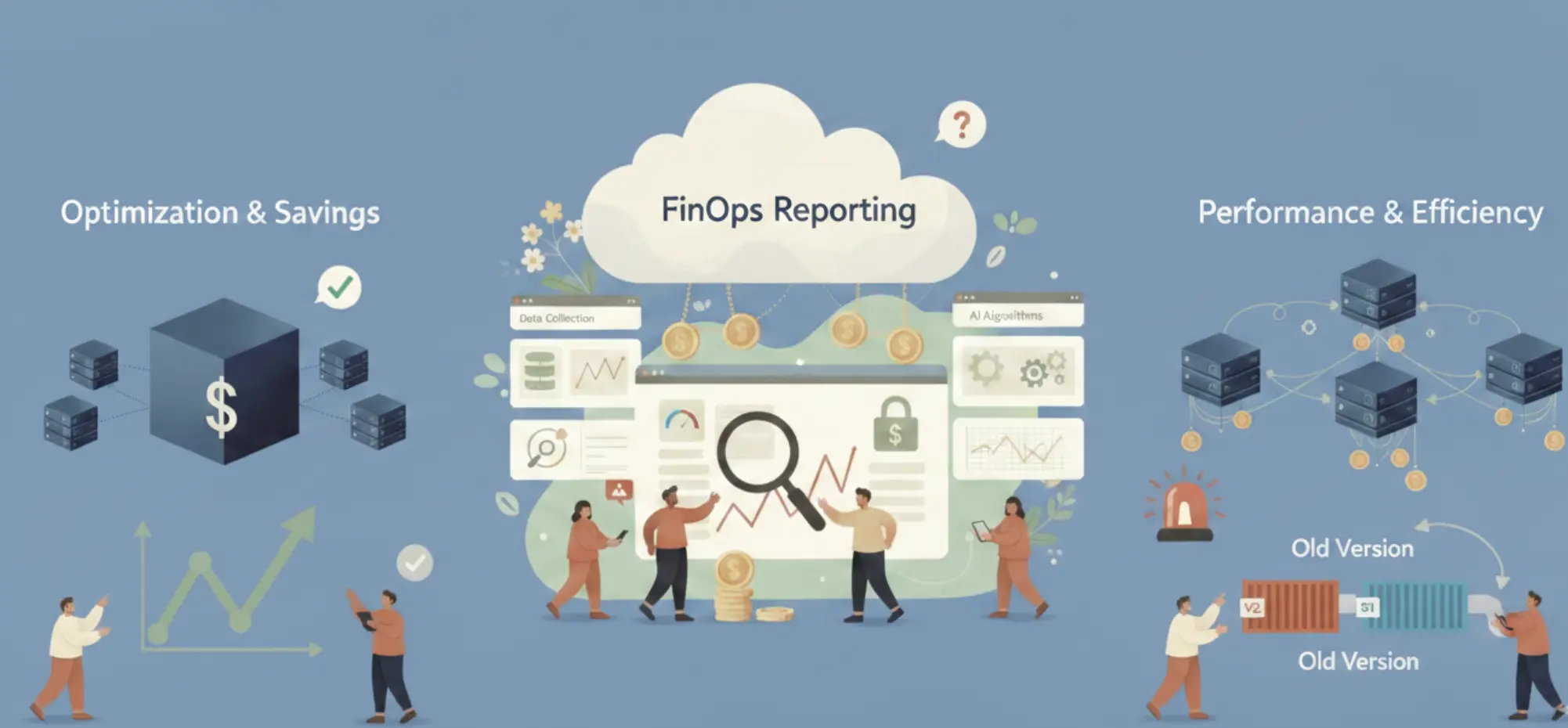
Most cloud cost dashboards show what you spent but not whether you are on track. Learn the five metrics every FinOps budget health page needs: estimated spend, verified savings, savings rate, cost trend, and budget health.
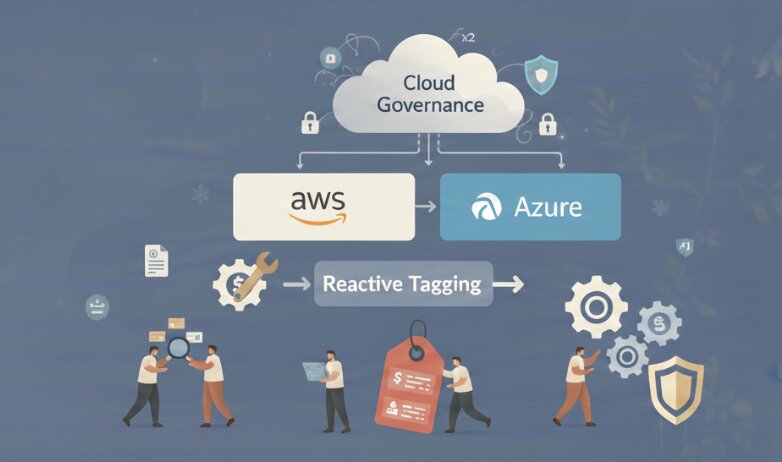
Manual tagging strategies have a consistent failure mode: they work at the start and break down within six months. Here's how to build enforcement at the point of creation and automated remediation on AWS and Azure.
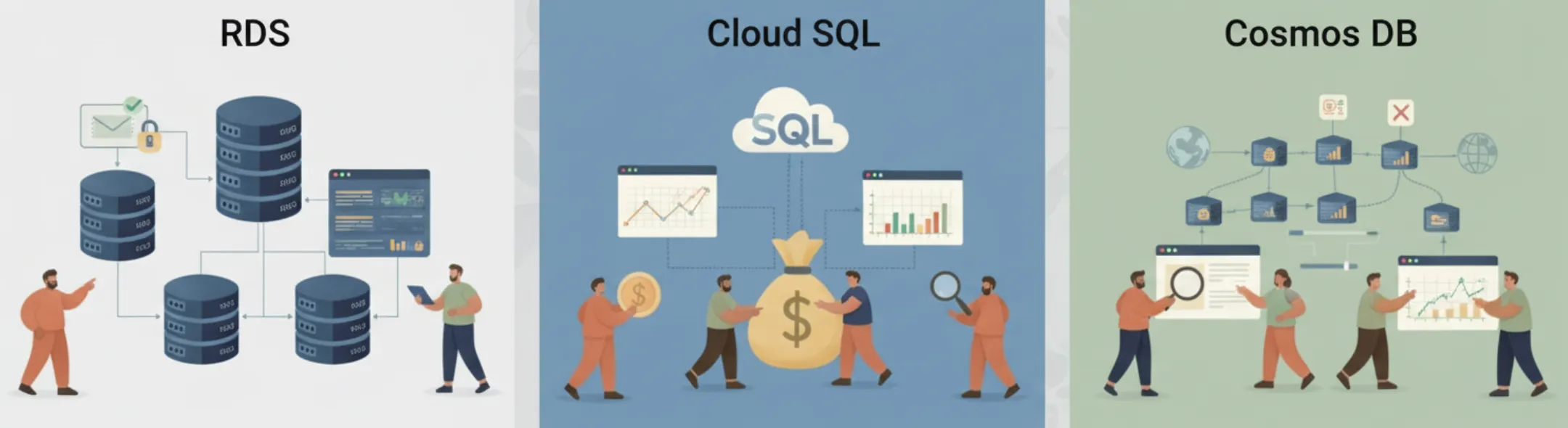
Database bills hide in HA multipliers, auto-grow storage, and idle non-prod instances. Here's where the money actually goes on RDS, Cloud SQL, and Cosmos DB, and the specific changes that cut it.

On-demand compute costs are nearly identical across AWS, Azure, and GCP. The real differences are in egress, block storage, Kubernetes control plane fees, and commitment flexibility. Here's the 2026 breakdown before it shows up on your invoice.

Surprise cloud bills don't announce themselves. Learn how to set up cost anomaly detection on AWS, GCP, and Azure to catch spikes in hours, not 30 days later when the invoice arrives.

SOC 2 audits fail on missing evidence, not missing controls. Here's the exact checklist cloud engineering teams need to pass CC6, CC7, and CC8 without surprises during fieldwork.
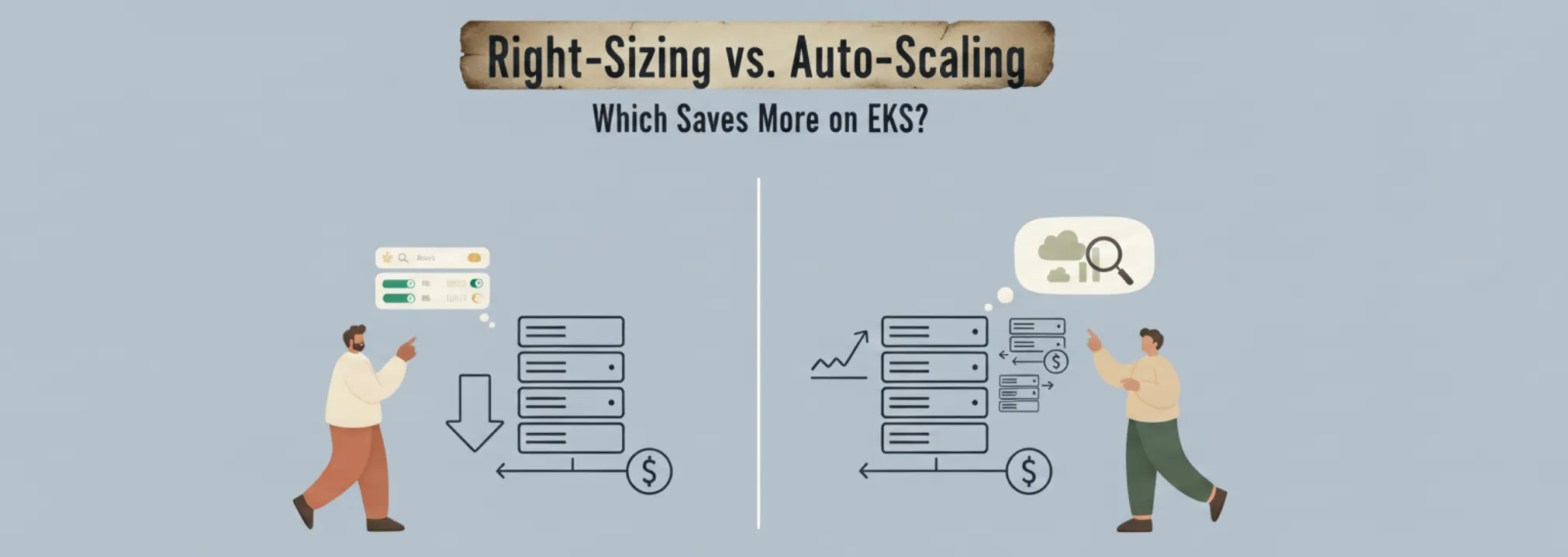
Most EKS teams enable Cluster Autoscaler and call it done, but the bill barely moves. Learn why right-sizing pod requests first is the fix that cuts baseline costs by 50–67%, and how to layer auto-scaling on top for maximum savings.

Discover why event-driven architecture is the operating system of the cloud. Learn how EDA enables reactive scaling, self-healing, and real-time cost control.
One post a week. Sundays. No "10 ways to think about cloud" listicles, just the engineering and FinOps notes we'd want to read.
See. Find. Fix. Automatic.
Connect your first cloud account in under 5 minutes. See your first remediation in under 7. No credit card required.