
A Token Should Declare Intent and Let IAM Decide at Call Time
ZopNight removed the frontend gate blocking capabilities your role lacks. Enforcement was always at the gateway, so the decision moved to call time.

Amanpreet works on Zop.Dev's cloud-cost engine, focused on commitment optimization and right-sizing across AWS, GCP, and Azure. She writes about Savings Plans vs RIs, break-even math, and the gnarly edges of multi-cloud cost data.
ZopNight removed the frontend gate blocking capabilities your role lacks. Enforcement was always at the gateway, so the decision moved to call time.

ZopNight re-reads the resource a finding fired on before closing it. All 264 rules that can raise a recommendation now carry a verification path.

Unattributed cloud costs are not a budgeting failure. They are a visibility and ownership failure, and $60,000 in untagged egress charges proves the point (ZopDev, "The Egress Bill Nobody…

The autoscaler decision you made at 50 nodes becomes a structural liability at 10,000. By the time the cluster grows to enterprise scale, the choice is load-bearing infrastructure. Replacing it…

Cloud pricing pages are built to sell compute and storage. Every other charge is buried.
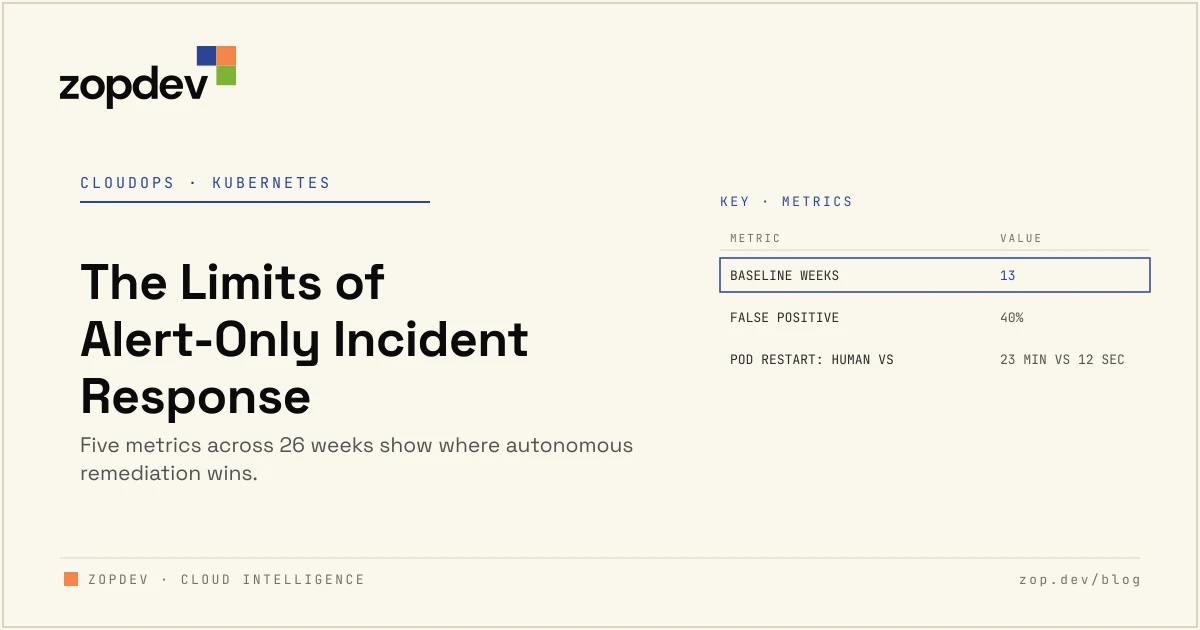
Alert-only incident response transfers the cost of every failure from the system to the engineer, and that transfer compounds at scale.

HashiCorp's August 2023 switch from the Mozilla Public License to the Business Source License forced every infrastructure team running Terraform to make a governance decision they had not budgeted…

A green dashboard is not evidence of a healthy system. It is evidence that your automation closed the tickets. These are different facts, and conflating them is how teams accumulate silent technical…

Cloud credits mask structural waste, and the bill that arrives after they expire reflects months of decisions made without cost accountability. This is the credit cliff: the moment a startup's…

Picking the wrong Kubernetes autoscaling tool for a given workload type does not just leave performance on the table. It actively generates waste you pay for every billing cycle.

Autonomous remediation systems promise to eliminate toil, but the mechanism that removes human latency also removes human judgment, and that trade produces a specific failure class: the…

When an on-call engineer is your primary failure mitigation strategy, you have not built reliability. You have built a human circuit breaker that trips at 2 a.m.

Visibility without a remediation path saves exactly $0, and we measured this directly: after 6 months of dashboard investment, cloud spend was unchanged (ZopDev, "The Visibility Trap: $0 Saved After…

Cloud providers price egress and API calls in ways that guarantee the invoice will not match the estimate. This is not an accident. The mechanism is structural: compute and storage costs appear…

Every Internal Developer Platform carries two price tags: the one on the sales deck, and the one buried in your engineers' calendars.

The pricing page is a cost floor, not a cost forecast. AWS, Azure, and GCP publish per-unit rates for compute, storage, and managed services. Those rates are accurate. The problem is that they…
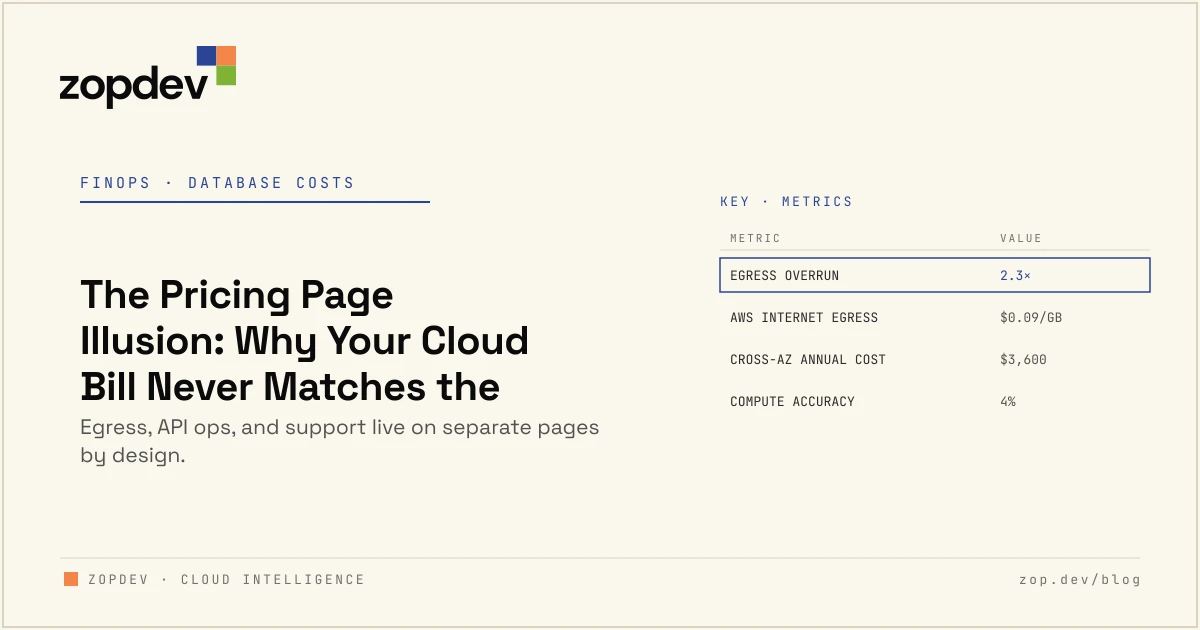
Cloud provider pricing pages are built to sell compute and storage, not to reveal what your workload actually costs in production. The headline numbers, virtual machine rates, object storage per GB,…

Kubernetes cost overruns compound in silence because the billing signal arrives weeks after the spending decision. A developer sets a memory request too high on a Tuesday. The scheduler honors that…

Cloud cost optimizations degrade predictably after implementation, and the degradation is structural, not accidental. Every manual FinOps cycle produces a point-in-time snapshot of savings. The…

Manual incident response at 2 AM is an organizational failure mode, not a staffing problem. When a bad deployment reaches production and an engineer's phone wakes them, the damage clock started…

Reactive alerting pipelines fail not because the tools are broken, but because the model is wrong. PagerDuty does exactly what it was designed to do: notify a human when a threshold is crossed. The…

Cloud cost optimizations expire. Not because engineers lose discipline, but because the infrastructure beneath every savings decision keeps moving. New services launch, teams grow, deployment…

A schedule recommendation you have to rebuild by hand mostly never gets applied. One-click apply turns identified savings into realized savings.

At $500k ARR, a company's cloud bill has grown large enough to make commitment-based discounting worth the operational cost of managing it, but not yet large enough to absorb the penalty of making…

Databricks cost is not one number. It is five compute surfaces billed on Azure VMs plus DBUs, and tools that meter only the VMs miss the waste.

Stop/start fixes idle resources, the easy half of cloud waste. Right-sizing and config changes mutate live resources and need their own rule class.

P95 CPU became the default right-sizing signal because it reduces a complex system to a single number that executives can approve in a slide deck. We measured this pattern across 40 production…

Most Azure cost-anomaly detection runs at one level: the subscription. That feels natural, because the subscription is where budgets and ownership usually sit. It is also where the detection misses…

Every cloud account has a list of idle resources nobody has touched in weeks. The recommendations exist. The savings are real. The list never gets shorter. The blocker is not data. The blocker is…

Ticket-based infrastructure workflows inject a minimum three-day delay into every deployment cycle because each request moves through a queue where a centralized team must interpret, validate, and…

Every FinOps playbook tells you to right-size your EC2 instances. Most of them tell you to use P95 CPU utilization as the signal. That advice will cost you more in rollbacks than it saves in compute.

The Autonomous Action Log: Auditing Every ZopNight Decision in Production CloudTrail is excellent at recording what happened. A node group scaled up at 14:32:07. A pod restarted at 14:32:41. An alarm…

AWS Savings Plans vs Reserved Instances: The Break-Even Model Before Every Commitment AWS offers two ways to commit compute spend in exchange for a discount: Savings Plans and Reserved Instances.…

A FinOps lead opens the cost report. A team-aggregate row shows $14,000 a month attributed to no team. The drill-down reveals 320 EC2 instances and 47 RDS databases with no tag. The lead opens a…

The cron expression means "stop at 7 PM, weekdays only." Most engineers can read it after a moment. A non-engineer cannot, and even the engineer who wrote it forgets the semantics within a quarter.…

A team provisions a Cloud SQL Postgres instance in one GCP VPC and wants to connect it to a GKE cluster in a different VPC. The team's instinct, learned from AWS habits, is to set up VPC peering…

A multi-cloud dashboard usually starts as a flat list of resources. One row per resource: name, type, region, status. Easy to scroll, easy to filter, easy to forget that the region column is the most…

The 2 a.m. compute runaway is the canonical FinOps incident. A Spark job is misconfigured to provision new EMR nodes every minute it cannot find a leader. A test agent left running on a developer's…

The closed-loop pipeline runs the easy part well. Detect fires, decide picks a remediation, act executes, verify confirms. The hard part is the line between "auto-execute" and "page a human." Most…

The cost of onboarding a new engineer at a mid-sized cloud-infrastructure org never shows up on a finance dashboard. There's no line item for "hours spent searching for the right runbook" or "Slack…

The 47th agent is when finance shows up. Below 30 agents in production, the Anthropic invoice is one tolerable line item somewhere south of $25,000 a month, and nobody asks who is spending what. Past…

A single Claude API call is predictable. An agent with tool access is not.

A runaway Lambda burns $200 an hour at 100 concurrent invocations. By the time your cost anomaly alert fires, three days have passed and $14,400 of unnecessary spend is already in the bill.

Every mid-size engineering organization has 5 to 15 AWS accounts that nobody actively owns. The "POC" account from 2024. The "team-old-name" account that survived the 2025 reorg. The…

The trust ceiling on AI in cloud automation is not capability. It is write access.

A plain AI cloud assistant tells you the S3 bucket is public. ZopNight + Claude via MCP tells you the bucket is public AND violates policy 47, which requires EU-only buckets for any object tagged…

GitHub Actions runner minutes, ECR image layers, artifact archives, and ephemeral test clusters rarely get the same scrutiny as production workloads. That is where the leak starts.

Unrestricted pod egress runs every outbound call through NAT Gateway at $0.045 per GB. NetworkPolicy is both a security control and a cost control. Here is how to use it as both.

Shared clusters without hard quotas become tragedy-of-the-commons cost problems. One team's memory leak becomes everyone's OOM. Here's how LimitRanges, ResourceQuotas, and namespace cost attribution fix that.

Tagging and dashboards don't change spending behavior. Learn how chargeback and showback models create real team-level cloud cost accountability — with allocation mechanics, phased rollout, and failure modes to avoid.
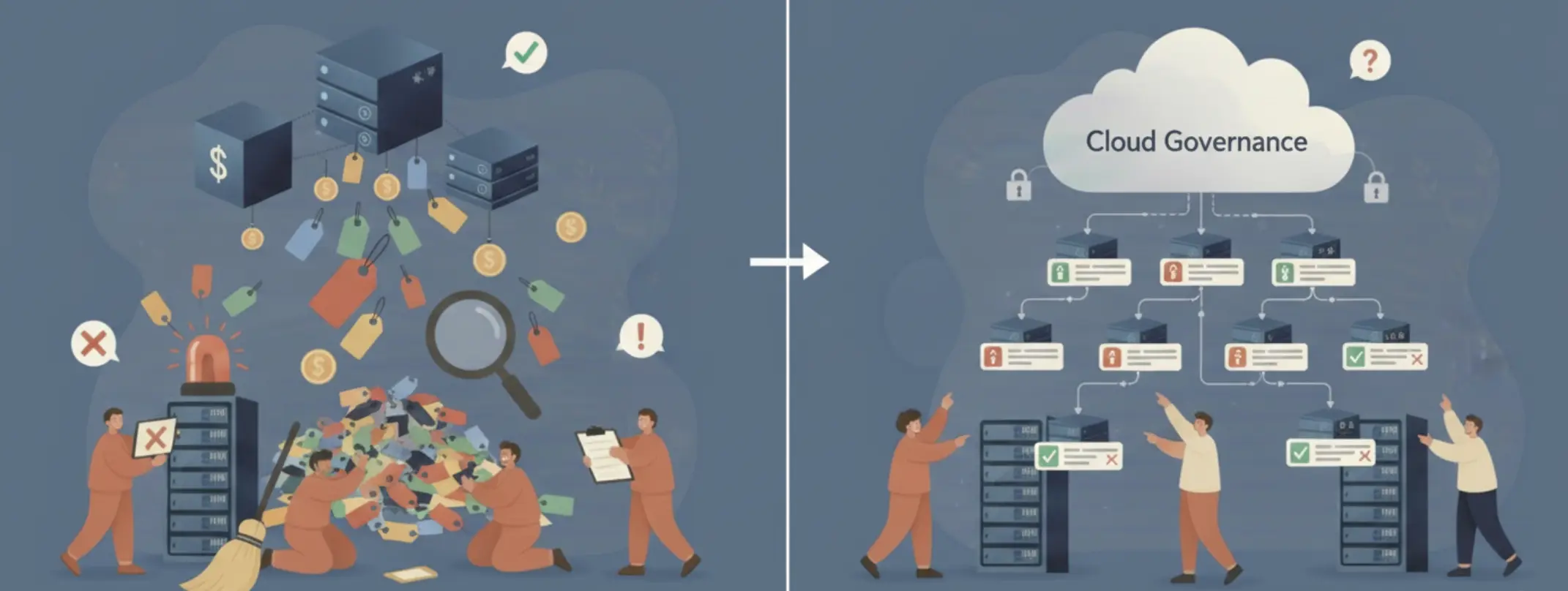
Reactive tagging is structurally broken. Learn why discovery-time tag governance eliminates unallocated spend before it ever appears in your billing reports.
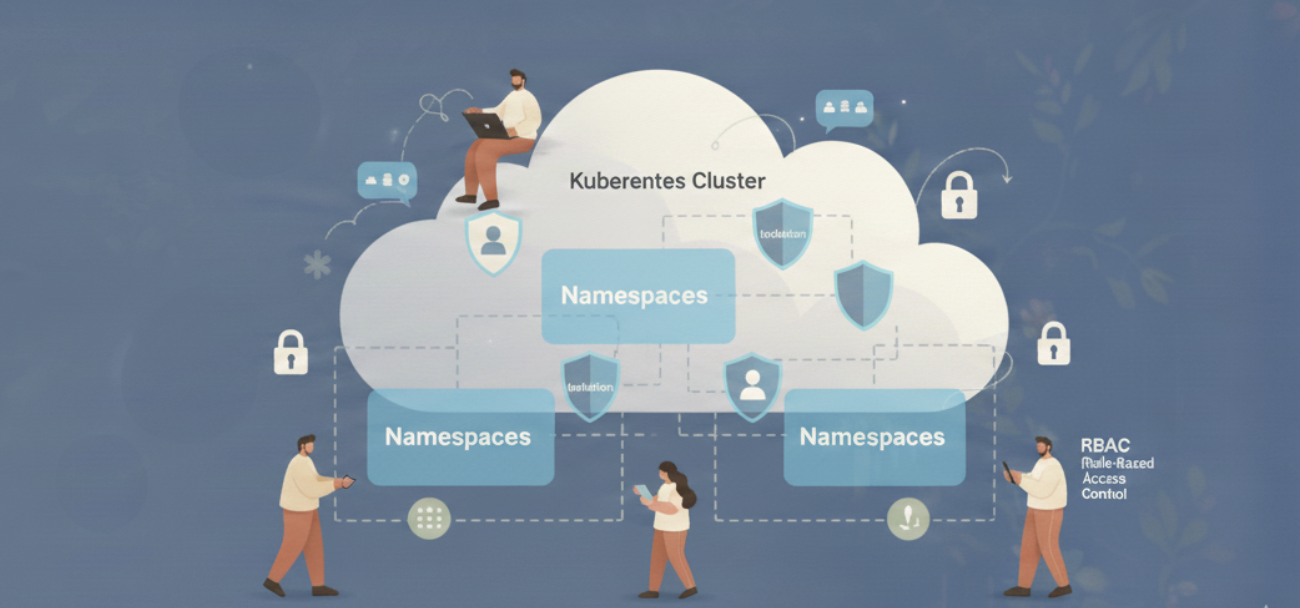
Most teams running shared Kubernetes clusters believe they have isolation. They have namespaces. It feels like separation. It is not. Here's how to configure actual multi-tenancy.
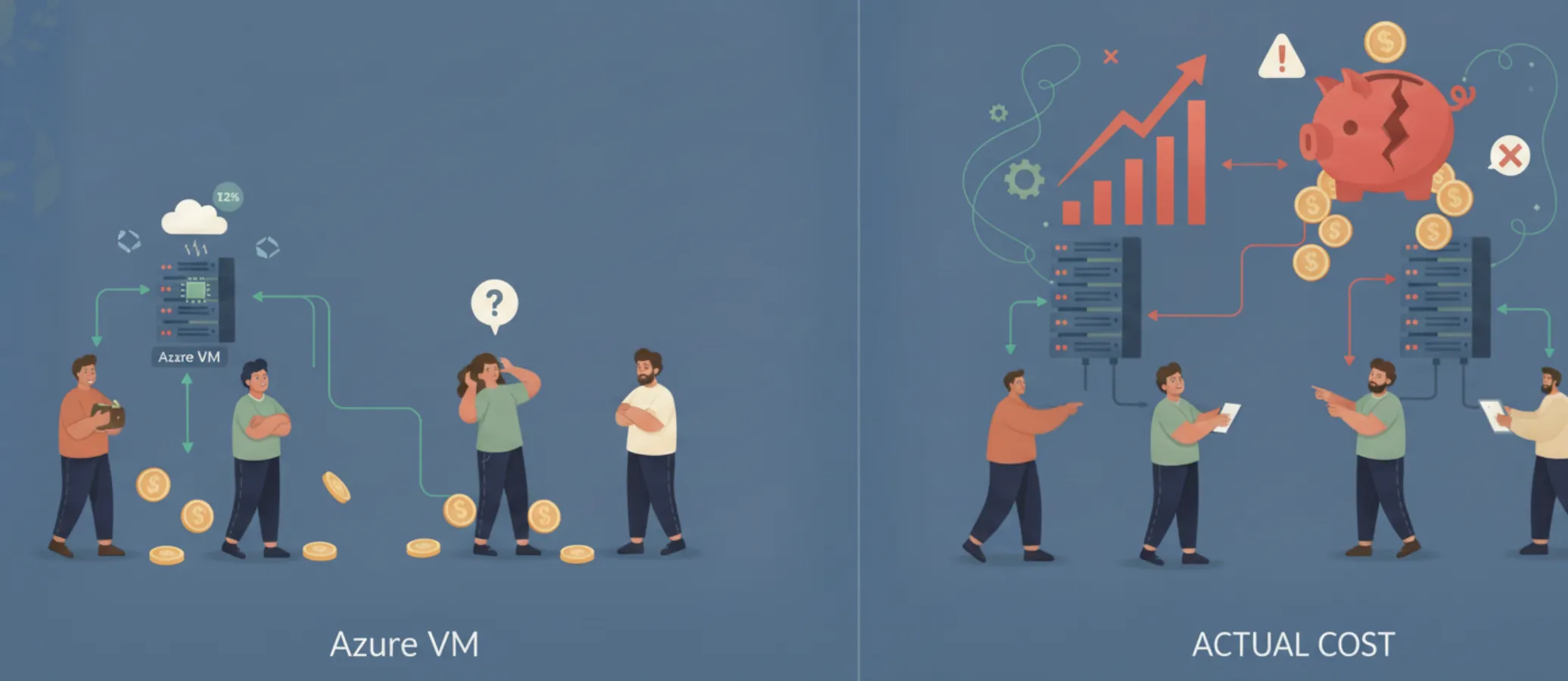
5% of Azure VMs run at under 15% CPU, and you're paying for 100% of them. Here's how to right-size using p95 metrics, stack Reserved Instances with Hybrid Benefit, and cut non-prod VM costs by 73% with scheduling.
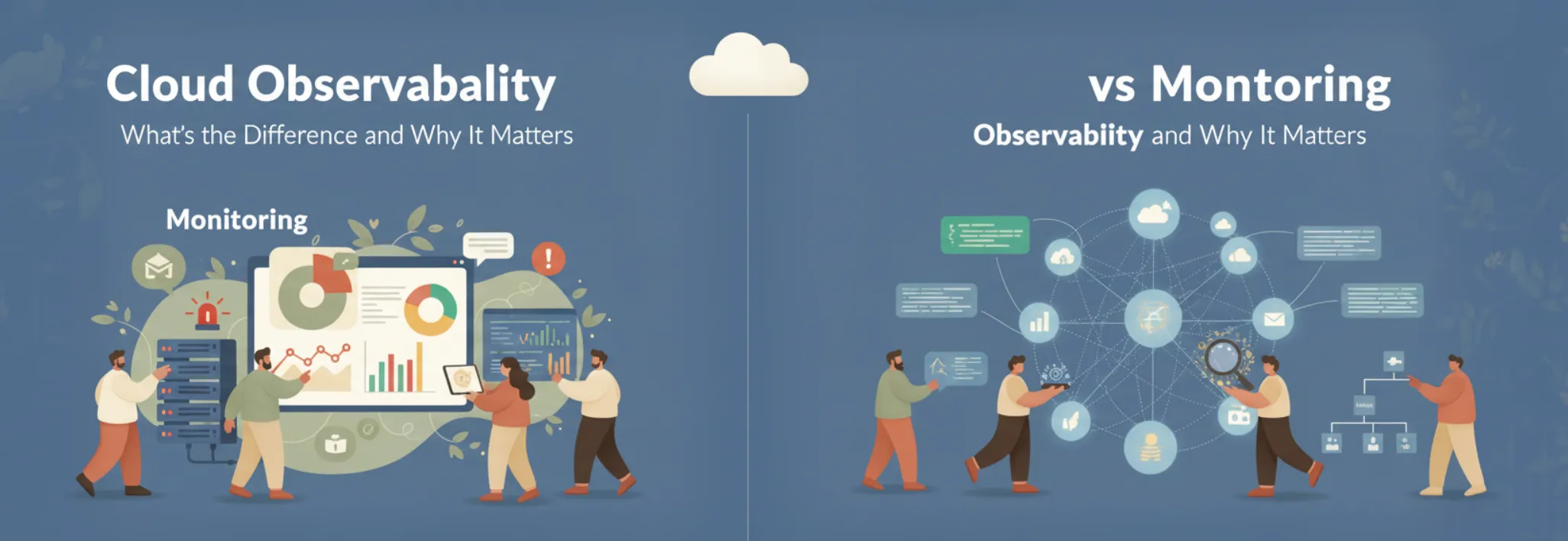
Monitoring tells you something is wrong. Observability tells you why. Learn the difference between logs, metrics, and traces and how to layer observability on top of your existing monitoring stack without starting over.
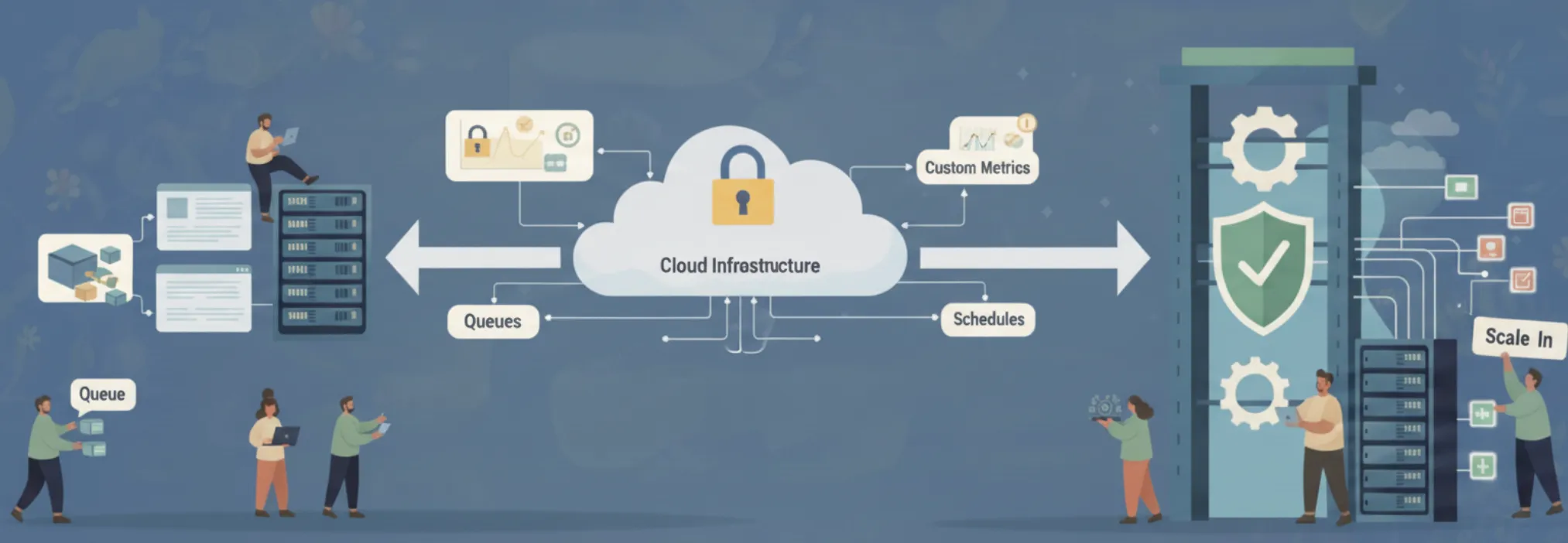
PU is the wrong scaling signal for queue workers, batch jobs, and async services. Learn how KEDA scales on queue depth, Kafka lag, Prometheus metrics, and cron schedules to cut idle compute costs by up to 73%.
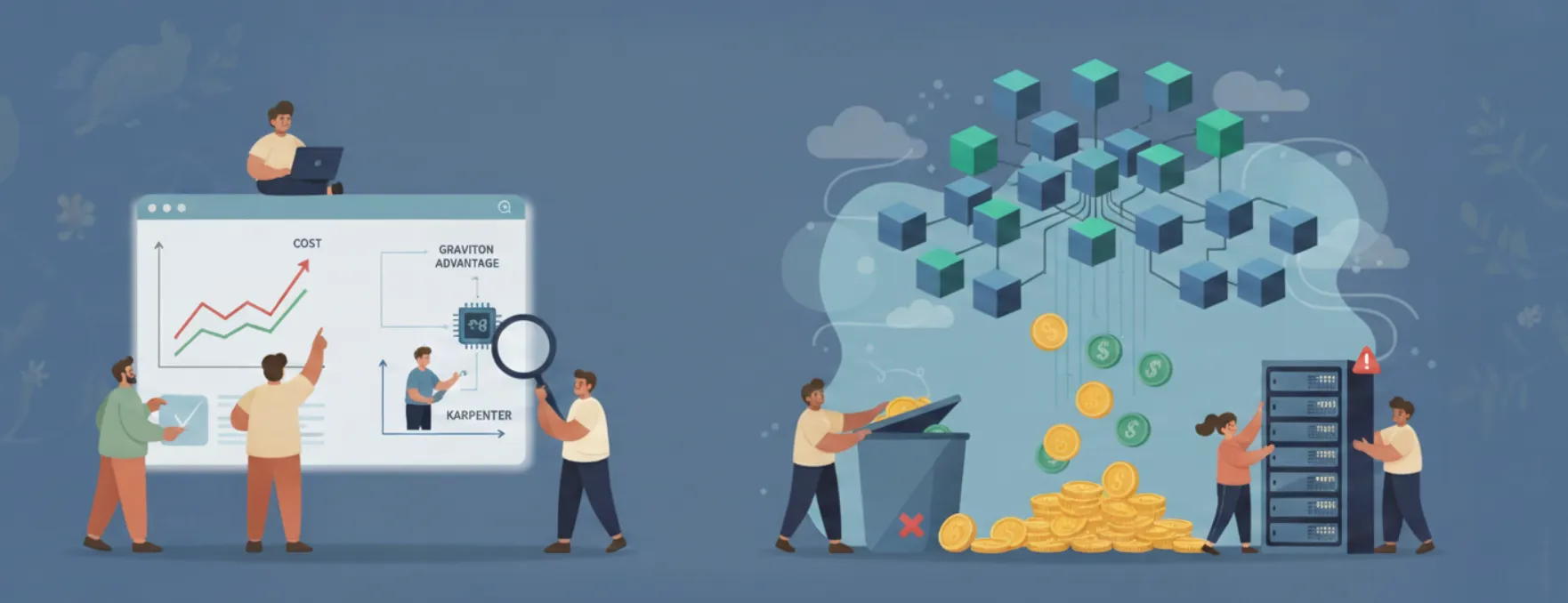
Running Kubernetes in production doesn't have to drain your budget. Learn how Spot instances, Karpenter, and Graviton ARM work together to cut Kubernetes costs by 38-42% without compromising reliability or performance.
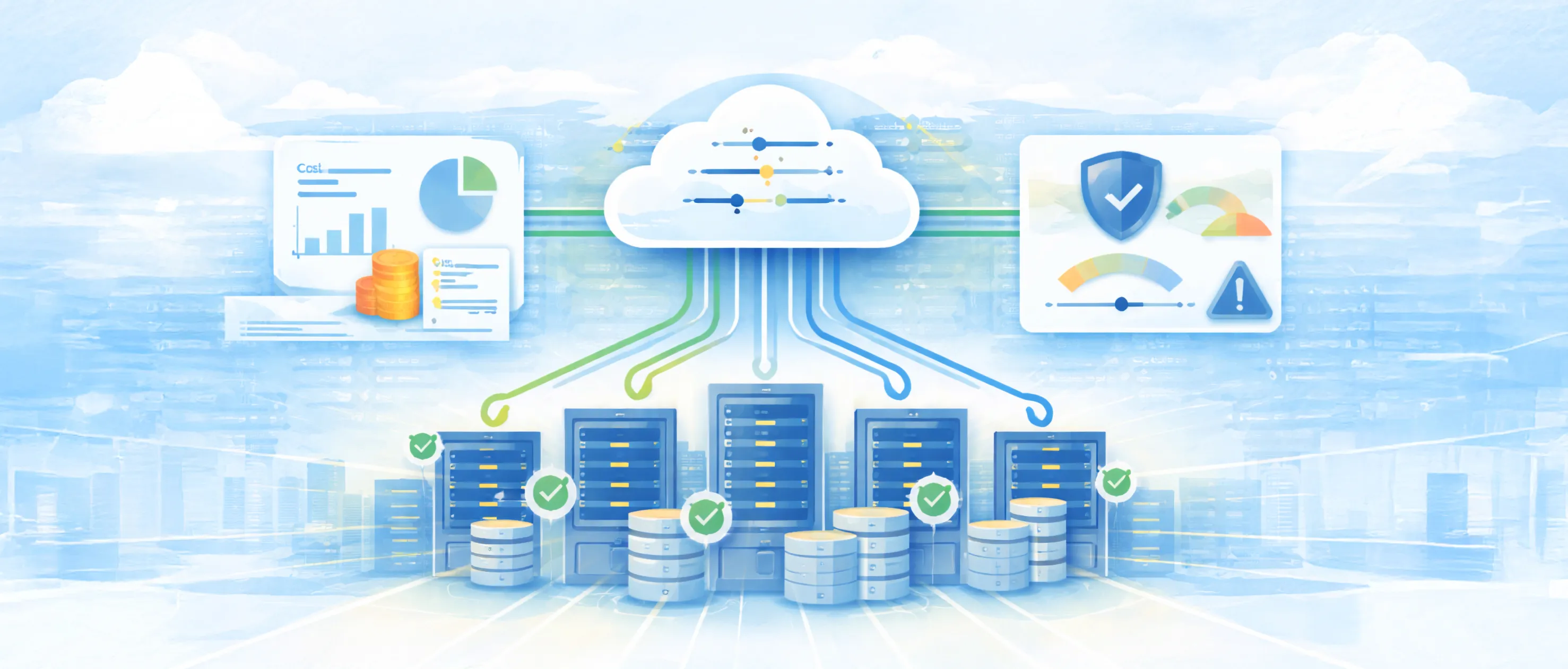
Discover why load balancing is a real-time decision engine for performance, risk, and cost. Learn how traffic orchestration drives reliability and cloud efficiency.
One post a week. Sundays. No "10 ways to think about cloud" listicles, just the engineering and FinOps notes we'd want to read.
See. Find. Fix. Automatic.
Connect your first cloud account in under 5 minutes. See your first remediation in under 7. No credit card required.