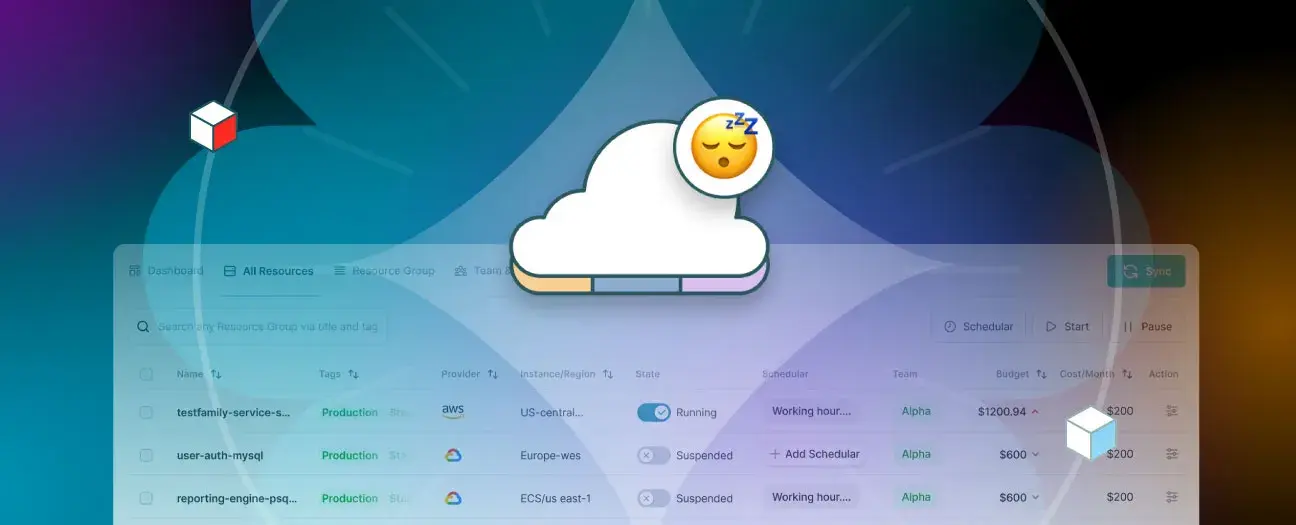

In the era of cloud-native development and microservices, engineering teams are empowered to build and scale faster than ever. But this agility comes with a price—literally. Unmonitored cloud resources, zombie environments, and lack of automation often lead to spiraling costs. This playbook outlines how modern DevOps teams can judiciously use cloud resources to optimize spend, improve performance, and streamline operations.
According to industry benchmarks, startups and even mature companies often waste 25% to 45% of their monthly cloud budget on idle or mismanaged resources.
As cloud adoption grows, it’s not just about scaling up fast—it’s about scaling smart. That means combining best practices in architecture, process, and tooling to make every compute minute and byte of storage count.
1. Rightsize Everything: From Instances to Databases
Let’s face it: overprovisioning is the default. Whether due to fear of latency, anticipated spikes, or “just-in-case” thinking, teams often spin up instance types that are too large and leave them untouched. This is one of the biggest contributors to cloud waste.
Instead:
- Start with smaller instance types in non-production environments and scale up as needed.
- Audit instance and database configurations quarterly.
- Use platform-native tools like AWS Compute Optimizer, Azure Advisor, or GCP Recommender for personalized recommendations.
Rightsizing doesn’t just mean reducing capacity. Sometimes it means selecting better-fitting instance families (e.g., switching from general-purpose to memory-optimized for in-memory apps).
Developer Tip: Set usage alerts that notify when CPU or memory stays below 20% for over a week. These are your candidates for downsizing.
2. Automate Sleep for Non-Production Environments
One of the most overlooked areas of savings is non-production environments. Dev, staging, QA, sandbox—these are often active only during work hours but left running 24/7.
According to TatvaSoft’s Cloud Cost Optimization Guide (2025), scheduling non-production environments can reduce cloud spend by up to 40%.
Lightweight automation tools now let you define precise schedules for cloud resources—without code or complex cron jobs.
A new platform is quietly launching that helps teams do exactly this: smart scheduling without disrupting workflows. It ensures you only run—and pay for—what’s needed, when it’s needed.
Developer Tip: Look out for tools that integrate with Slack or your CI/CD to let you override schedules when you need a quick exception.
3. Consolidate Monitoring and Visibility
Disjointed monitoring is another silent killer. When logs live in one system, metrics in another, and cost data in a third, you’re flying blind.
Zopdev helps solve this by offering:
- Unified cross-cloud resource visibility
- Cost breakdowns by region, service type, and environment
- Real-time alerts when resource patterns deviate
Platforms like CloudZero emphasize aligning engineering with cost. Zopdev takes it further with a developer-first experience that integrates directly into workflows.
Developer Tip: Implement a cost dashboard using Zopdev widgets and pin it to your daily standup ritual.
4. Kill Zombie Resources
Every engineer has, at some point, forgotten to delete:
- An EBS volume
- A static IP address
- A detached load balancer
- An unused container cluster
These “zombie” resources may cost just cents per hour—but across a company, they accumulate rapidly.
To fix this:
- Run weekly scripts to identify unused resources
- Use AWS Trusted Advisor or GCP Recommender
- Add cleanup jobs into CI/CD pipelines
Developer Tip: Add a time-to-live tag to non-critical resources. Automate cleanup if TTL is exceeded.
5. Make Cost Optimization a Team Culture
From CloudZero: “Every engineer should be aware of the cost of their decisions.”
That means:
- Making cloud cost part of your definition of done
- Incentivizing teams to stay under budget
- Enabling developers to self-serve infra with cost guardrails
Zopdev enables teams to:
- Assign budgets to resource groups
- Visualize cost per service/deploy
- Correlate performance with cost trends
Developer Tip: Add cloud cost summaries to infra-related PRs using Zopdev’s API.
6. Plan for Scaling Without Waste
As teams grow, cost scales too. More engineers = more environments = more waste.
Scale efficiently with:
- Infrastructure as Code (IaC) for consistency
- Auto-expiry policies for test environments
- Centralized governance (RBAC, tagging policies)
Zopdev provides policy enforcement and guardrails. And a new automation tool will soon help with ephemeral environments and shutdown routines.
Developer Tip: Build ephemeral environments with auto-expiry to reduce friction and save costs.
Conclusion: Cloud Cost Isn’t Just a Finance Problem
Judicious use of cloud resources is no longer optional—it’s a business imperative. The best teams are no longer just shipping fast—but shipping smart and sustainably.
By implementing proven practices like:
- Rightsizing
- Smart scheduling
- Cross-cloud visibility
- Zombie resource cleanup
- Cultural cost-awareness
…teams can drive 30–60% reduction in waste while improving agility.
Zopdev gives your team a centralized platform to monitor, control, and optimize cloud spend—without disrupting your existing workflows.
Sources & Further Reading
- Spacelift: 18 Cloud Cost Optimization Best Practices (2025)
- CloudZero: 15+ Cloud Cost Optimization Practices
- TatvaSoft: Cloud Cost Optimization Best Practices 2025