Introduction
Why Does Kubernetes Feel So Complicated?
“Kubernetes is powerful, but it feels like assembling IKEA furniture without instructions.” This sentiment resonates with many DevOps teams grappling with the complexity of Kubernetes. The truth is, while Kubernetes is the go-to solution for container orchestration, its steep learning curve often leaves teams overwhelmed.
The good news? Deploying applications on Kubernetes doesn’t have to be an exercise in frustration. By adopting the right tools and practices, you can simplify your deployments, save time, and even enjoy the process. In this hands-on guide, we’ll show you how to tame Kubernetes and make your deployments a breeze.
Core Insights: Why Kubernetes Feels Overwhelming
The Big Pain Points
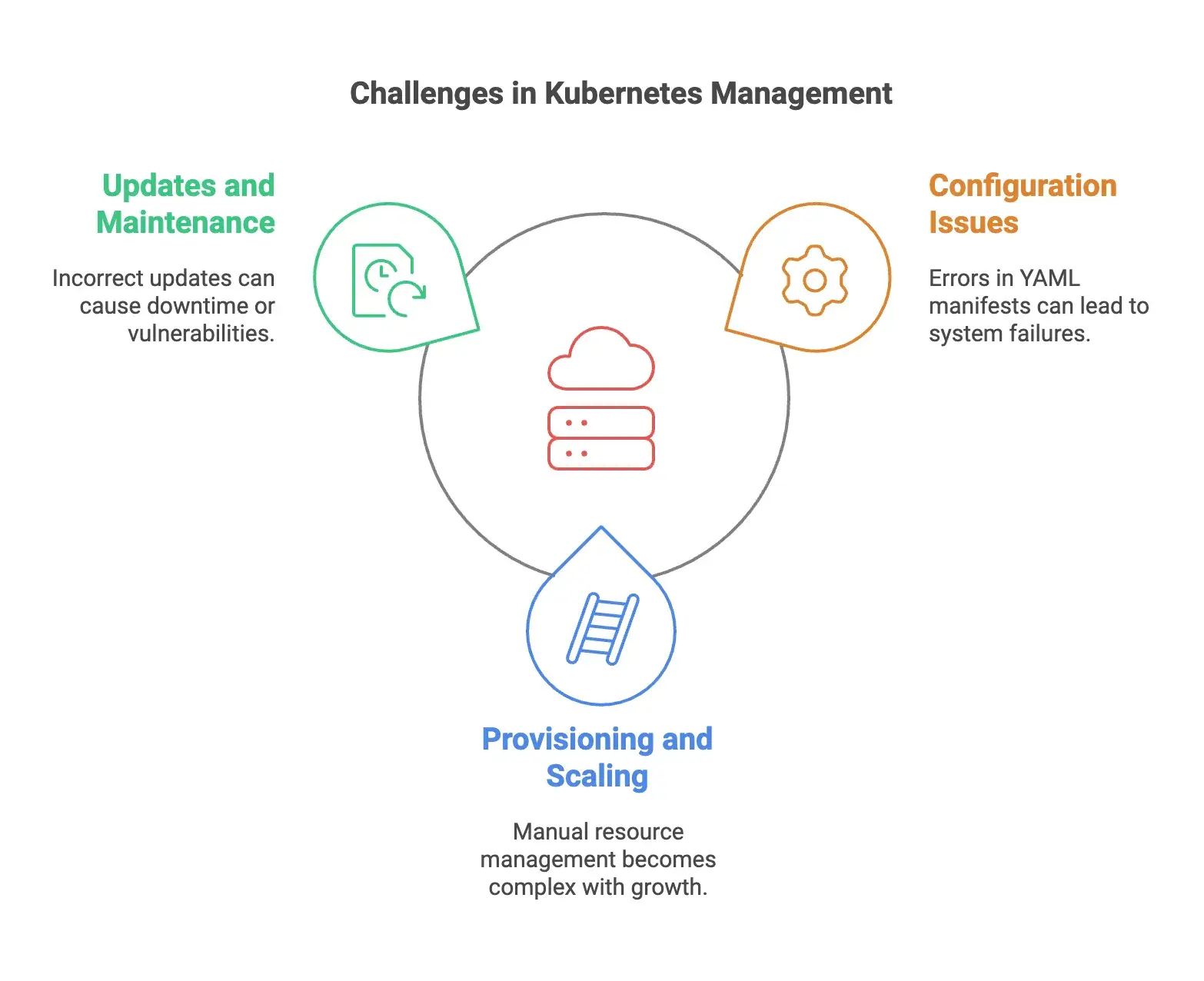
Kubernetes shines as a container orchestrator, but its complexity often stems from three main challenges:
-
Configuration Issues
Kubernetes relies heavily on YAML manifests, which, while powerful, are prone to errors. Typos, mismatched API versions, and incomplete resource definitions are just a few common pitfalls. -
Provisioning and Scaling
Managing clusters manually becomes exponentially harder as your workloads grow. Without automation, resource provisioning and scaling can feel like a never-ending battle. -
Updates and Maintenance
Updating Kubernetes components, applications, and dependencies requires expertise and meticulous planning. Missteps can result in downtime or security vulnerabilities.

Key Highlight:
According to industry research, automation in Kubernetes can reduce deployment errors by up to 50% and cut deployment time by 60%.
Misconceptions About Kubernetes
Kubernetes is often perceived as inherently complex. However, much of this complexity arises from manual processes and a lack of streamlined workflows. Automation and best practices can make Kubernetes manageable—even enjoyable.
Technical Deep Dive: Simplifying Kubernetes Step-by-Step
Step 1: Start with Declarative Configuration
Kubernetes embraces a declarative model for defining infrastructure. Instead of imperatively specifying each action, you declare the desired state of your system, and Kubernetes ensures it matches.
Example: A Minimal Deployment YAML
apiVersion: apps/v1kind: Deploymentmetadata: name: my-appspec: replicas: 3 selector: matchLabels: app: my-app template: metadata: labels: app: my-app spec: containers: - name: my-app image: my-app:latest ports: - containerPort: 80This simple YAML file defines a deployment for a containerized application with three replicas. While YAML can be verbose, tools like Kustomize or Helm can help manage and template configurations.
Step 2: Automate Cluster Provisioning
Manual cluster setup is both time-consuming and error-prone. Tools like Terraform or Ansible can automate infrastructure creation, ensuring consistency across environments.
Terraform Example for Kubernetes Clusters
provider "kubernetes" {  config_path = "~/.kube/config"}
resource "kubernetes_namespace" "example" {  metadata {    name = "example-namespace"  }}
With Terraform, you can provision namespaces, services, and even entire clusters programmatically, reducing human error.
Key Highlight:
According to recent findings, teams using automation tools like Terraform experience a 40% reduction in setup time compared to manual methods.
Step 3: Embrace GitOps for Continuous Deployment
GitOps takes the declarative model a step further by using Git as the single source of truth for your Kubernetes configurations. Tools like Flux or ArgoCD synchronize your cluster state with your Git repository.
How GitOps Works
- You push configuration changes to your Git repo.
- A GitOps tool detects the changes and applies them to your cluster.
- The tool continuously monitors for drift and ensures the cluster matches the desired state.
This approach not only simplifies deployments but also provides a clear audit trail.
Applied Examples: A Hands-On Walkthrough
Deploying a Sample Microservice
Let’s deploy a simple microservice to Kubernetes in just a few steps. All you need is a container image and a Kubernetes cluster.
Step 1: Create a Deployment
kubectl apply -f deployment.yamlStep 2: Expose the Service
kubectl expose deployment my-app --type=LoadBalancer --name=my-serviceThis command creates a LoadBalancer service, exposing your application to external traffic.
Step 3: Verify the Deployment
kubectl get podskubectl get svcYou should see your pods running and your service assigned an external IP address.
Fact Box:
A 2019 CNCF survey found that 78% of Kubernetes users cited “simplified deployments” as a key driver for adopting container orchestration.
Best Practices Cheat Sheet
- Use Namespace Isolation: Group related resources under namespaces to avoid conflicts.
- Enable RBAC: Implement Role-Based Access Control for secure cluster management.
- Monitor Everything: Use tools like Prometheus and Grafana for real-time metrics and alerts.
Next Steps: Simplify Even Further with Automation
While the steps above can streamline Kubernetes deployments, automation tools can take it to the next level. Platforms like ZOP offer a fully managed, cloud-agnostic approach, abstracting the complexity of Kubernetes and letting you focus on deploying applications.
How ZOP Fits In
- Streamlined Cluster Management: ZOP automates cluster setup, scaling, and updates, saving you countless hours.
- Multi-Cloud Flexibility: Deploy across AWS, GCP, or Azure without vendor lock-in.
- Unified Observability: Monitor and manage your deployments from a single pane of glass.
By leveraging ZOP, you can achieve the benefits of Kubernetes without the manual overhead.
Conclusion
Key Takeaways
- Understand the Complexity: Kubernetes is powerful but requires careful planning and tooling to manage effectively.
- Leverage Automation: Tools like Terraform and GitOps reduce manual effort and increase reliability.
- Adopt Best Practices: Proper RBAC, monitoring, and namespace usage can prevent common pitfalls.
Inspirational Quote:
“Technology should empower, not overwhelm. With the right tools, Kubernetes can become your greatest ally in building scalable, resilient applications.”
To simplify Kubernetes further, consider exploring platforms like ZOP, which abstract away the operational complexity and allow you to focus on innovation.
Curious to learn more? Check out our resources on Kubernetes best practices and automation strategies.